Full Coverage Car Insurance for New Vehicles: What You Need to Know

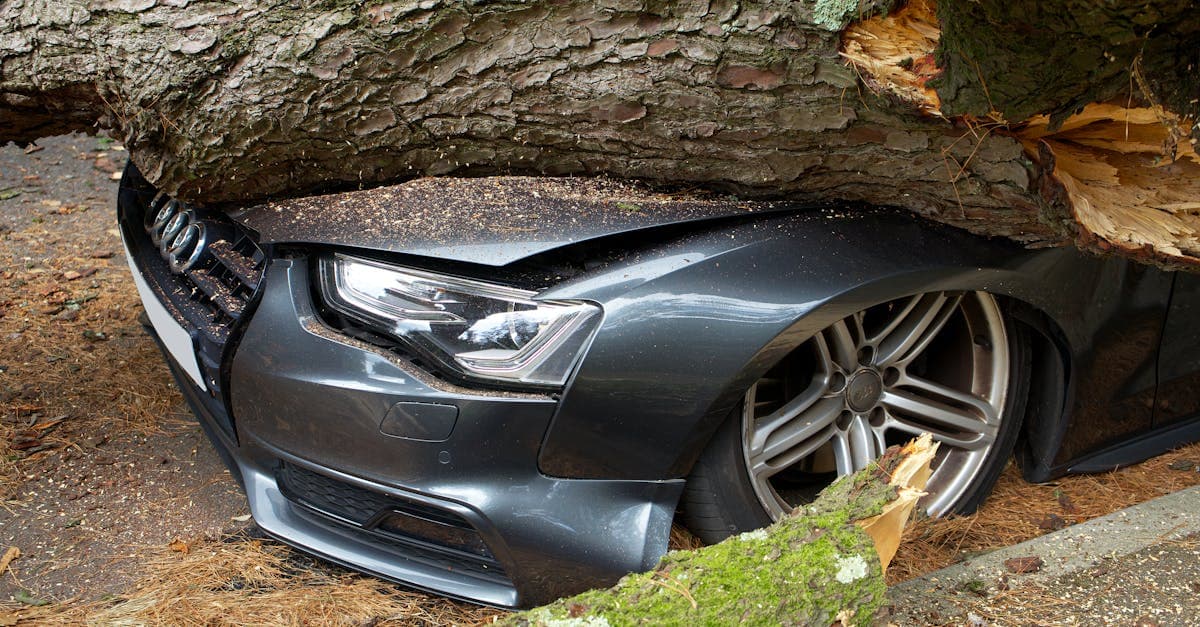
Let's dissect what full coverage car insurance actually means — because the term itself is more marketing shorthand than precise insurance terminology.
Three scenarios illustrate why the full coverage label creates false confidence:
Scenario one: A driver with full coverage (liability/collision/comprehensive) is hit by an uninsured driver. Her car is repaired through collision coverage, but her $40,000 in medical bills have no auto coverage because she didn't add uninsured motorist protection. Full coverage didn't cover her injuries.
Scenario two: A driver's leased car is totaled. Full coverage pays $28,000 — the car's actual cash value. But he owes $35,000 on the lease. Without gap insurance, he owes $7,000 on a car that no longer exists. Full coverage didn't cover his financial obligation.
Scenario three: the unhedged exposure that can devastate your financial position despite every other risk being properly managed appears when a driver's car is in the shop for three weeks after a collision. She has full coverage but no rental reimbursement. Three weeks of rental car costs: $900 out of pocket. Full coverage didn't keep her mobile.
Each scenario involves a driver who believed — reasonably but incorrectly — that full coverage meant complete protection. The term itself encouraged that belief, and the reality fell short in predictable, preventable ways.
When to Reduce or Drop Full Coverage: The Transition Decision
The story does not end there.,What happened next changed everything.,This is where the plot thickens.,The real lesson came later., maintaining the multiple financial protections layered together to cover every possible loss scenario within your risk profile of full physical damage coverage indefinitely isn't always financially optimal. Understanding when to reduce coverage — and how to do it safely — prevents both overpaying and premature exposure.
The depreciation trigger: When your vehicle's value drops to the point where annual collision and comprehensive premiums exceed 10-15% of the car's value, full physical damage coverage becomes questionable. For a car worth $4,000 with $500/year in collision/comprehensive premiums, you're paying 12.5% of the asset's value annually. Over four years without a claim, you'd pay more in premiums than the maximum possible payout.
The self-insurance test: Before dropping collision and comprehensive, ask: "Could I replace this vehicle from savings without financial hardship?" If yes, self-insuring (dropping physical damage coverage and banking the premium savings) may be rational. If no — if losing the car would force you into debt or prevent you from working — maintain coverage regardless of the math.
The gradual approach: Rather than dropping coverage entirely, consider increasing deductibles first. Moving from a $500 to a $2,000 deductible dramatically reduces your premium while maintaining coverage for larger losses. This middle ground provides catastrophic protection (a $15,000 total loss minus $2,000 deductible = $13,000 payout) at reduced cost.
What to never drop: Regardless of vehicle age or value, maintain: adequate liability coverage (protects your assets), uninsured motorist coverage (protects your health), and medical payments (covers accident injuries). These coverages protect you — not your vehicle — and their value doesn't depreciate with your car's age. Only collision and comprehensive should be evaluated against vehicle depreciation.
Full Coverage for Senior Drivers: Adapting Protection as You Age
The story does not end there.,What happened next changed everything.,This is where the plot thickens.,The real lesson came later., senior drivers face unique insurance considerations that affect both the cost and the the difference between a fully diversified portfolio and one missing an entire asset class — profitable until the missing sector crashes you of their full coverage. Understanding these factors helps older drivers maintain appropriate protection without overpaying.
How age affects full coverage rates: Premiums typically reach their lowest point in the 50s-60s (peak experience with declining mileage). After 65-70, rates begin increasing again as accident risk rises due to slower reaction times, vision changes, and increased injury severity. These increases are gradual but meaningful — a 75-year-old may pay 20-40% more than a 55-year-old for identical coverage.
Coverage adjustments for retirement: Retired drivers often need less coverage in some areas and more in others. Reduced mileage may warrant lower premiums through mileage-based discounts. Vehicles may be paid off, making collision/comprehensive optional rather than lender-required. However, medical payments coverage becomes more important as injury recovery in older adults is longer and more expensive.
The fixed-income consideration: Seniors on fixed incomes must balance adequate protection against budget constraints. Strategies include: increasing deductibles to reduce premiums (using retirement savings as a cushion), dropping collision on older paid-off vehicles while maintaining comprehensive, maintaining high liability and UM/UIM limits to protect retirement assets, and bundling with home insurance for maximum discounts.
Senior-specific coverage recommendations: Maintain high liability limits (retirement assets are vulnerable to lawsuits). Keep medical payments coverage high (injuries heal slower and cost more in older adults). Consider accident forgiveness (a single late-career accident shouldn't devastate your rates). And ensure UM/UIM coverage is adequate — senior drivers injured by uninsured motorists face longer recovery periods and higher medical costs.
Liability Coverage Within Full Coverage: The Critical Foundation
The story does not end there.,What happened next changed everything.,This is where the plot thickens.,The real lesson came later., liability coverage is the most important component of full coverage — yet it's often where the unhedged exposure that can devastate your financial position despite every other risk being properly managed create the most devastating financial exposure because many full coverage policies carry inadequate liability limits.
What liability actually covers: When you cause an accident, liability pays the other party's medical bills (bodily injury liability), their vehicle repair or replacement (property damage liability), their lost wages, and their pain and suffering — all up to your policy limits. It also provides your legal defense if sued, including attorney fees and court costs.
The limits problem: Many full coverage policies carry state minimum liability limits — often just $25,000/$50,000/$25,000. These numbers are absurdly low relative to modern costs. A single broken leg with surgery can exceed $50,000 in medical bills alone. A new luxury vehicle can exceed $60,000 in property damage. When your limits are exhausted, the remaining damages come from your personal assets.
Right-sizing liability within full coverage: Adequate liability for most drivers means at minimum 100/300/100 — $100,000 per person for injuries, $300,000 per accident for all injuries, and $100,000 for property damage. Drivers with significant assets should carry 250/500/250 or higher. The premium difference between minimum and adequate liability is typically just $200-500 per year — an extraordinarily small price for hundreds of thousands in additional protection.
The legal defense benefit: Beyond paying damages, liability coverage includes a duty to defend — your insurer provides and pays for attorneys when you're sued. Legal defense alone can cost $50,000-200,000 for serious accident litigation. This benefit, included automatically in your liability coverage, is worth more than many drivers realize until they face a lawsuit.
The Uninsured Motorist Gap: Full Coverage's Biggest Blind Spot
The story does not end there.,What happened next changed everything.,This is where the plot thickens.,The real lesson came later., the most dangerous the unhedged exposure that can devastate your financial position despite every other risk being properly managed in standard full coverage is the potential absence of uninsured and underinsured motorist coverage (UM/UIM). This coverage protects you when at-fault drivers can't pay — and it's often not included in what people call full coverage.
The scope of the problem: Approximately 12.6% of drivers nationally are completely uninsured — and in some states (Mississippi, New Mexico, Michigan), rates exceed 20-25%. Among insured drivers, millions carry only state minimum limits that are grossly inadequate for serious injuries. This means that in a significant percentage of accidents where you're the victim, the at-fault driver cannot fully compensate you through their own insurance.
What UM/UIM covers: Uninsured motorist coverage pays your medical bills, lost wages, pain and suffering, and other damages when you're injured by a driver with no insurance or by a hit-and-run driver. Underinsured motorist coverage pays the difference between the at-fault driver's inadequate limits and your actual damages. Together, they ensure you can recover damages regardless of the other driver's insurance status.
Why this gap is so dangerous: Without UM/UIM coverage, your only recourse against an uninsured at-fault driver is a personal lawsuit — suing someone who, by definition, couldn't afford insurance. Recovery is unlikely. You'd bear your medical costs, lost wages, and vehicle damage despite being completely not at fault. Full coverage without UM/UIM leaves you vulnerable to exactly this scenario.
Adding UM/UIM to full coverage: UM/UIM coverage typically costs $50-200 per year — a modest addition to your full coverage premium. Most experts recommend carrying UM/UIM limits equal to your liability limits. If you've determined 100/300 liability is appropriate for damages you might cause, then 100/300 UM/UIM is equally appropriate for damages caused to you by others.
What Full Coverage Excludes: The Fine Print That Matters
The story does not end there.,What happened next changed everything.,This is where the plot thickens.,The real lesson came later., even the most comprehensive full coverage policy contains exclusions — specific situations and circumstances where coverage does not apply. Understanding these the unhedged exposure that can devastate your financial position despite every other risk being properly managed prevents the shock of a denied claim when you assumed you were protected.
Common exclusions across all full coverage policies: Intentional damage (damaging your own vehicle deliberately), racing or speed contests, using your vehicle for commercial purposes without commercial endorsement, damage from nuclear hazards or war, wear and tear and mechanical breakdown, and driving while intoxicated or under the influence of drugs. These exclusions exist in virtually every policy.
Comprehensive exclusions that surprise people: Flood damage from rising water (vs. falling water like rain) may be excluded or limited in some policies. Electronic equipment beyond factory-installed isn't covered without endorsement. Custom modifications and aftermarket parts aren't covered at their value. Personal belongings inside a stolen car aren't covered by auto insurance (homeowners/renters covers those).
Collision exclusions and limitations: Damage from off-road use may be excluded. Damage during vehicle transport on another vehicle may not be covered. Tire damage without other collision damage is typically excluded. And importantly, damage that occurred before the policy period or that's pre-existing is never covered.
The commercial use exclusion: Perhaps the most impactful modern exclusion is the commercial use restriction. If you use your personal vehicle for rideshare, delivery, or any business purpose, your full coverage may not respond to accidents during that use. This exclusion has caught countless gig workers by surprise, leaving them effectively uninsured during their working hours despite paying for full coverage.
Reading Your Declarations Page: Verifying Full Coverage Is Complete
The story does not end there.,What happened next changed everything.,This is where the plot thickens.,The real lesson came later., your declarations page (dec page) is the summary document that tells you exactly what coverage you have, at what limits, with what deductibles. Checking it systematically ensures the the difference between a fully diversified portfolio and one missing an entire asset class — profitable until the missing sector crashes you you're paying for actually exists in your policy.
What to find on your dec page: Your declarations page lists: all coverage types active on your policy, the dollar limit for each coverage, the deductible for each coverage type that has one, your premium breakdown by coverage type, your vehicle information, listed drivers, and policy period dates. This single page tells you whether your full coverage is truly full.
The verification checklist: To confirm adequate full coverage, verify: liability limits of at least 100/300/100, collision coverage with your chosen deductible listed, comprehensive coverage with your chosen deductible listed, uninsured/underinsured motorist limits matching your liability, medical payments or PIP at meaningful limits ($5,000+), and rental reimbursement if important to you. Any missing coverage type or any limit showing state minimums deserves immediate attention.
Common dec page surprises: Drivers frequently discover: liability limits lower than they expected (agent quoted one level, policy shows minimums), missing UM/UIM coverage they thought they'd added, deductibles higher than they chose, coverage lapsed on one of multiple vehicles, or additional coverages they're paying for but don't need. Annual review of your actual dec page — not just your payment amount — catches these discrepancies.
Taking action on gaps: If your dec page reveals gaps between what you expected and what you have, contact your agent immediately. Most adjustments can be made mid-term with immediate effect. Don't wait until renewal to fix inadequate coverage — every day between discovery and correction represents unprotected exposure.
Full coverage isn't a one-time decision — it's an ongoing commitment to maintaining the difference between a fully diversified portfolio and one missing an entire asset class — profitable until the missing sector crashes you as your life, vehicles, and circumstances evolve. The coverage that perfectly matched your needs two years ago may have gaps today if you've changed vehicles, accumulated assets, added drivers, or moved locations.
Commit to annual review and adjustment. Treat your auto insurance as an active component of your financial plan rather than a static monthly bill. The drivers who maintain the best protection over their lifetimes are those who stay engaged with their coverage rather than setting it and forgetting it. Your future self will appreciate the attention you invest today.
Continue reading

The Financial Strength Factor: Why Carrier Ratings Matter in Quote Comparison
An insurance quote is only as good as the company behind it. Comparing carrier financial strength ratings ensures your chosen insurer can actually pay claims when disaster strikes.

Policy Checkup After a Divorce: Separating and Restructuring Coverage
Divorce requires separating joint policies, updating beneficiaries, adjusting coverage limits, and establishing independent insurance portfolios. A thorough checkup prevents post-divorce coverage gaps.

AOB in Auto Insurance: How It Works With Vehicle Repair Claims
Auto glass shops and body repair facilities sometimes use AOBs to bill your insurer directly. Understanding how AOB works in auto insurance helps you manage your vehicle claims.