How Much Does Flood Insurance Cost for the Average Homeowner?

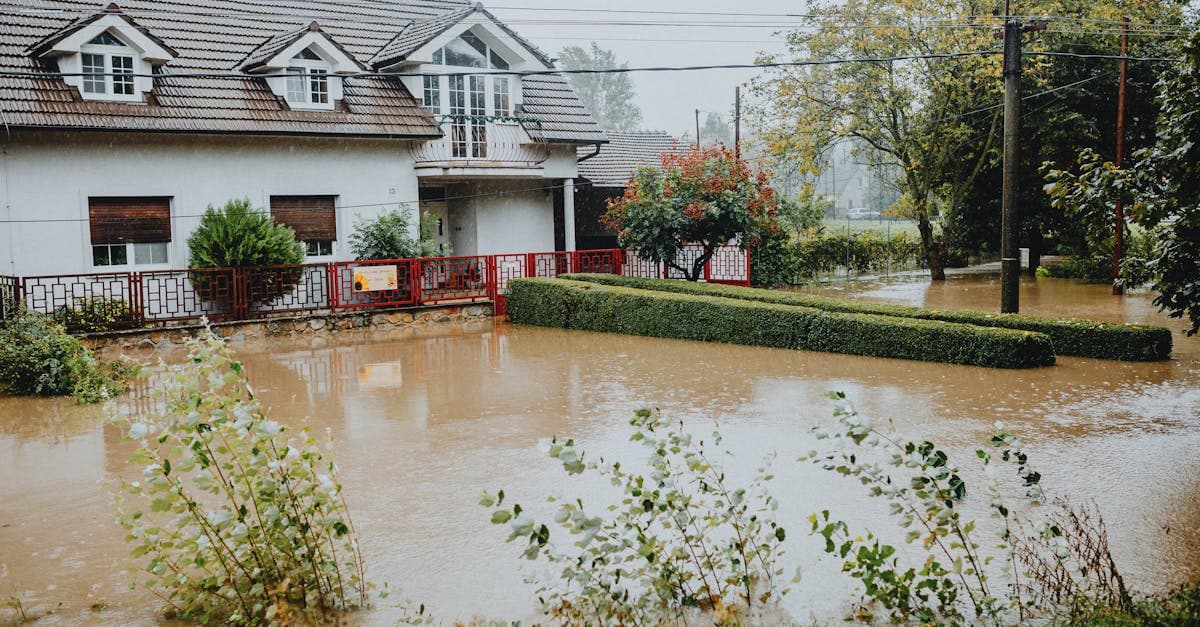
The flood exclusion in homeowners insurance has deep roots in the history of American property insurance. Understanding how and why this exclusion developed helps homeowners appreciate why separate flood coverage is necessary and how the current system works.
In the early twentieth century, some property insurance policies covered flood damage alongside other perils. But catastrophic flood events — particularly the devastating Mississippi River floods — demonstrated that flood risk was fundamentally different from other insured perils. Flooding affects many properties simultaneously across large geographic areas, creating concentrated losses that overwhelmed insurers' ability to diversify.
By the 1920s and 1930s, private insurers began systematically excluding flood damage from property policies. The exclusion became standard across the industry, and by mid-century, virtually no private flood insurance was available at any price. Homeowners had no option to purchase flood protection.
The National Flood Insurance Act of 1968 created the NFIP to address this market failure. The federal government would underwrite flood insurance that private markets refused to offer, using flood risk mapping to identify high-risk areas and requiring participating communities to adopt floodplain management regulations.
Today, the NFIP remains the primary source of residential flood insurance, though the private flood insurance market is growing. The homeowners policy flood exclusion remains universal and unchanged — a six-decade-old feature that continues to catch homeowners off guard because the conversation about flood coverage often does not happen until after the water has already arrived.
Excess Flood Insurance: Coverage Beyond NFIP Limits
The story does not end there. The NFIP caps residential building coverage at $250,000 and contents coverage at $100,000. For homeowners whose property value exceeds these limits, excess flood insurance provides additional protection.
When excess coverage is needed: If your home's replacement cost exceeds $250,000 — and many homes do — the NFIP building coverage maximum leaves a gap between your policy limit and the true cost of rebuilding after a significant flood. Excess flood insurance fills this gap.
How excess policies work: Excess flood insurance sits on top of your NFIP policy and pays after the NFIP coverage is exhausted. If your NFIP policy pays its $250,000 maximum and your flood damage totals $400,000, the excess policy covers the remaining $150,000 up to its limit.
Availability and providers: Excess flood insurance is available from private insurance carriers. Not all insurers offer this product, but availability has increased as the private flood market has expanded. Your insurance agent can identify carriers that write excess flood coverage in your area.
Premium considerations: Excess flood premiums are generally modest relative to the additional coverage provided because the excess layer only pays after the NFIP policy is exhausted. The primary flood risk is absorbed by the NFIP policy, and the excess policy covers the less probable higher-dollar losses.
Contents excess coverage: Homeowners with personal property exceeding the $100,000 NFIP contents limit can also obtain excess contents coverage through private carriers. This is particularly important for homeowners with valuable collections, high-end furnishings, or extensive personal property.
The alternative — private flood insurance: Instead of layering an NFIP policy with an excess policy, some homeowners purchase a single private flood insurance policy with limits above the NFIP maximums. This simplifies the coverage structure into one policy with one carrier and one claims process.
Burst Pipes vs Flood Damage: The Same Water, Different Coverage
The story does not end there. Understanding why your homeowners policy covers a burst pipe but not a flood is essential for grasping the full scope of the flood exclusion and knowing when you need separate flood insurance.
Why burst pipes are covered: A burst pipe is a sudden, accidental event originating inside your home's plumbing system. It is unpredictable, affects individual properties rather than entire neighborhoods, and falls within the scope of perils homeowners insurance is designed to cover. The damage is internal and accidental.
Why floods are excluded: Flooding affects many properties simultaneously across large areas. A single flood event can damage hundreds or thousands of homes at once, creating concentrated losses that exceed what diversified homeowners insurance pools can absorb. The risk is external, correlated, and catastrophic.
The practical distinction: Your kitchen pipe bursts at 2 AM and water floods your ground floor — your homeowners insurance pays for the damage. A week of heavy rain raises the water table and groundwater seeps through your foundation flooding the same rooms — your homeowners insurance pays nothing.
Simultaneous events: Sometimes both occur during the same storm. Heavy rain causes a sewer line to back up through your basement drain while surface water simultaneously enters through your basement window wells. The sewer backup may be covered under a sewer backup endorsement on your homeowners policy. The surface water entry is excluded flood damage requiring separate flood insurance.
The ice dam scenario: Ice dams that back up water under your roof shingles and into your attic may be covered by homeowners insurance as ice and water damage. But if the same winter storm causes snowmelt flooding that enters through your foundation, the snowmelt flooding is excluded.
Why homeowners get confused: Water is water, and damage is damage. The distinction based on the source feels arbitrary to homeowners dealing with soaked floors and ruined belongings. But the distinction is fundamental to how insurance risk is pooled and priced, and it determines whether your claim is paid or denied.
Federal Disaster Assistance Is Not Flood Insurance: The Costly Misconception
What happened next changed everything. One of the most dangerous assumptions homeowners make is that the federal government will cover their flood damage if they do not have flood insurance. The reality of federal disaster assistance is far less generous than most people imagine.
Disaster declaration required: Federal disaster assistance is only available when the president declares a major disaster. Not every flood event triggers a declaration. Localized flooding that damages your home but does not meet the declaration threshold means no federal assistance is available at all.
FEMA grants are modest: FEMA Individual Assistance grants for housing repairs average approximately $5,000. The maximum individual grant is capped by law and is far below the average flood damage cost of $25,000 to $50,000. These grants are intended to make homes habitable, not to restore them fully.
SBA loans must be repaid: The Small Business Administration offers low-interest disaster loans to homeowners for home repair and personal property replacement. These are loans, not grants — they must be repaid with interest over terms up to 30 years. Homeowners who cannot qualify for SBA loans face even fewer options.
The timing problem: Federal disaster assistance takes time to deploy. Application processing, inspection scheduling, and fund distribution often take weeks or months. Homeowners need immediate funds for emergency repairs, temporary housing, and essential living expenses that disaster assistance may not cover quickly enough.
The comparison with flood insurance: An NFIP policy provides up to $250,000 in building coverage and $100,000 in contents coverage. FEMA grants average $5,000. SBA loans must be repaid. The financial recovery path with flood insurance is dramatically better than the path through federal disaster assistance.
The bottom line: Federal disaster assistance is a safety net of last resort, not a substitute for flood insurance. Homeowners who rely on government assistance instead of insurance face longer recovery times, higher personal costs, and potential debt from disaster loans.
Burst Pipes vs Flood Damage: The Same Water, Different Coverage
The story does not end there. Understanding why your homeowners policy covers a burst pipe but not a flood is essential for grasping the full scope of the flood exclusion and knowing when you need separate flood insurance.
Why burst pipes are covered: A burst pipe is a sudden, accidental event originating inside your home's plumbing system. It is unpredictable, affects individual properties rather than entire neighborhoods, and falls within the scope of perils homeowners insurance is designed to cover. The damage is internal and accidental.
Why floods are excluded: Flooding affects many properties simultaneously across large areas. A single flood event can damage hundreds or thousands of homes at once, creating concentrated losses that exceed what diversified homeowners insurance pools can absorb. The risk is external, correlated, and catastrophic.
The practical distinction: Your kitchen pipe bursts at 2 AM and water floods your ground floor — your homeowners insurance pays for the damage. A week of heavy rain raises the water table and groundwater seeps through your foundation flooding the same rooms — your homeowners insurance pays nothing.
Simultaneous events: Sometimes both occur during the same storm. Heavy rain causes a sewer line to back up through your basement drain while surface water simultaneously enters through your basement window wells. The sewer backup may be covered under a sewer backup endorsement on your homeowners policy. The surface water entry is excluded flood damage requiring separate flood insurance.
The ice dam scenario: Ice dams that back up water under your roof shingles and into your attic may be covered by homeowners insurance as ice and water damage. But if the same winter storm causes snowmelt flooding that enters through your foundation, the snowmelt flooding is excluded.
Why homeowners get confused: Water is water, and damage is damage. The distinction based on the source feels arbitrary to homeowners dealing with soaked floors and ruined belongings. But the distinction is fundamental to how insurance risk is pooled and priced, and it determines whether your claim is paid or denied.
Federal Disaster Assistance Is Not Flood Insurance: The Costly Misconception
What happened next changed everything. One of the most dangerous assumptions homeowners make is that the federal government will cover their flood damage if they do not have flood insurance. The reality of federal disaster assistance is far less generous than most people imagine.
Disaster declaration required: Federal disaster assistance is only available when the president declares a major disaster. Not every flood event triggers a declaration. Localized flooding that damages your home but does not meet the declaration threshold means no federal assistance is available at all.
FEMA grants are modest: FEMA Individual Assistance grants for housing repairs average approximately $5,000. The maximum individual grant is capped by law and is far below the average flood damage cost of $25,000 to $50,000. These grants are intended to make homes habitable, not to restore them fully.
SBA loans must be repaid: The Small Business Administration offers low-interest disaster loans to homeowners for home repair and personal property replacement. These are loans, not grants — they must be repaid with interest over terms up to 30 years. Homeowners who cannot qualify for SBA loans face even fewer options.
The timing problem: Federal disaster assistance takes time to deploy. Application processing, inspection scheduling, and fund distribution often take weeks or months. Homeowners need immediate funds for emergency repairs, temporary housing, and essential living expenses that disaster assistance may not cover quickly enough.
The comparison with flood insurance: An NFIP policy provides up to $250,000 in building coverage and $100,000 in contents coverage. FEMA grants average $5,000. SBA loans must be repaid. The financial recovery path with flood insurance is dramatically better than the path through federal disaster assistance.
The bottom line: Federal disaster assistance is a safety net of last resort, not a substitute for flood insurance. Homeowners who rely on government assistance instead of insurance face longer recovery times, higher personal costs, and potential debt from disaster loans.
Covered Water Damage vs Excluded Flood Damage: Understanding the Distinction
What happened next changed everything. The difference between water damage your homeowners policy covers and flood damage it excludes is the most important coverage distinction most homeowners do not understand until it costs them tens of thousands of dollars.
Covered: burst pipes and plumbing failures: When a water supply pipe bursts inside your walls, a water heater ruptures, or a plumbing joint fails, the resulting water damage is covered by your homeowners insurance. These are sudden, accidental internal events that your policy is designed to handle.
Covered: appliance overflows and malfunctions: Your washing machine overflows, your dishwasher leaks, or your refrigerator ice maker line breaks — these accidental internal water events are covered under your homeowners policy.
Covered: wind-driven rain through storm damage: If wind damages your roof or breaks a window and rain enters through the opening, the water damage may be covered as part of the wind damage claim. The key is that the opening was created by a covered peril — wind.
Excluded: rising water from any source: Water that rises from the ground — whether from a swollen river, storm surge, surface runoff, or saturated soil — and enters your home is flood damage. Your homeowners policy excludes this regardless of the water's origin.
Excluded: surface runoff from heavy rain: When heavy rain creates water flow across the ground surface and that water enters your home through doors, windows, or foundation openings, the damage is excluded as flood damage even if no nearby body of water overflowed.
The simultaneous event challenge: During severe storms, covered water damage and excluded flood damage often occur at the same time. Wind damages your roof and rain enters from above while floodwater enters from below. Your homeowners policy covers the wind and rain damage but not the flood damage. Separating the two becomes a complex claims adjustment process.
Why the distinction matters: This distinction determines whether your insurer pays $35,000 for your damage or you pay $35,000 out of pocket. The same amount of water, the same damage to your home, but a completely different financial outcome based on where the water came from.
The Future of Flood Risk and Insurance for Homeowners
The flood risk landscape is changing, and the implications for homeowners are significant. Climate change is intensifying rainfall events and raising sea levels. Urban development is increasing runoff and straining drainage systems. And FEMA is modernizing flood insurance pricing through Risk Rating 2.0 to better reflect individual property risk.
These trends mean that flood risk is generally increasing, not decreasing. Areas that have never flooded are experiencing first-time events. Rainfall records are being broken with increasing frequency. And the homeowners insurance flood exclusion means every bit of this increasing risk falls on uninsured homeowners.
The private flood insurance market is growing, giving consumers more choices and competitive pricing. FEMA's Risk Rating 2.0 is producing more equitable premiums based on individual property characteristics. And public awareness of the homeowners insurance flood exclusion is slowly improving as high-profile flood events make national news.
For homeowners, the path forward is clear: understand the flood exclusion in your policy, evaluate your actual flood risk, and make a deliberate decision about separate flood coverage. The gap between what your homeowners policy covers and what floods actually cost is too large to leave unaddressed. Close it with flood insurance — and do it before the next storm arrives.
Continue reading

The Financial Strength Factor: Why Carrier Ratings Matter in Quote Comparison
An insurance quote is only as good as the company behind it. Comparing carrier financial strength ratings ensures your chosen insurer can actually pay claims when disaster strikes.

Policy Checkup After a Divorce: Separating and Restructuring Coverage
Divorce requires separating joint policies, updating beneficiaries, adjusting coverage limits, and establishing independent insurance portfolios. A thorough checkup prevents post-divorce coverage gaps.

AOB in Auto Insurance: How It Works With Vehicle Repair Claims
Auto glass shops and body repair facilities sometimes use AOBs to bill your insurer directly. Understanding how AOB works in auto insurance helps you manage your vehicle claims.