How Florida PDL Handles Total Loss Claims

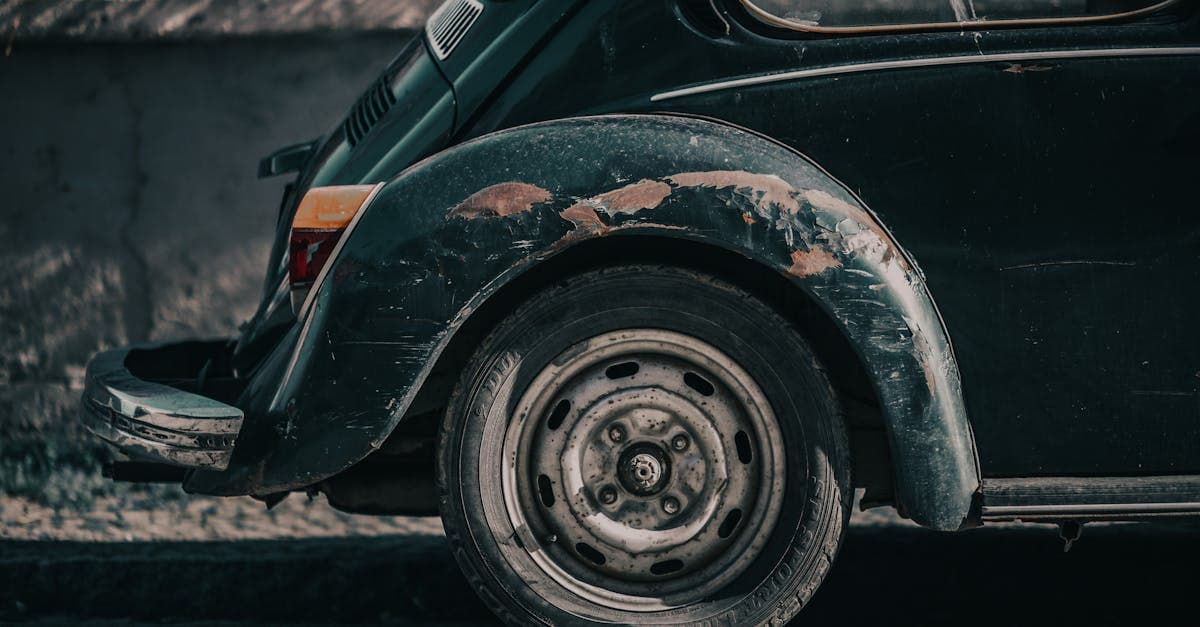
Florida's Property Damage Liability requirement has a history that explains why today's minimum feels so inadequate. When the state established its minimum PDL requirement, the average vehicle cost a fraction of what it costs today. Repair technology was simpler, parts were cheaper, and a $10,000 limit covered most property damage claims with room to spare.
Over the decades, vehicle prices have climbed steadily while Florida's minimum PDL requirement remained static. The average new car price in Florida now exceeds $40,000. Even used vehicles average well above $15,000. Yet the $10,000 PDL floor that protected drivers when cars cost $5,000 has not moved to reflect this reality.
Florida's unique insurance framework adds another layer of context. As a no-fault state for personal injuries, Florida built its auto insurance system around PIP coverage for medical expenses and PDL for property damage — deliberately omitting a bodily injury liability requirement that most other states mandate. This framework means PDL carries even more weight in Florida because it is one of only two required coverages.
Understanding this history helps explain why Florida's PDL minimum is where it is and why simply meeting the legal requirement does not mean you are adequately protected. The law sets a floor, not a recommendation. The coverage you actually need depends on the vehicles and properties you might damage, and those values have far outpaced the statutory minimum.
Florida PDL and Total Loss Scenarios
The story does not end there. When you cause an accident that totals someone else's vehicle, your PDL limit faces its greatest test. Understanding how total loss claims work under Florida PDL helps you appreciate the financial exposure of inadequate coverage.
When total loss is declared: The other driver's vehicle is declared a total loss when repair costs exceed a threshold — typically 80 percent of the vehicle's actual cash value in Florida. At that point, the insurer pays the vehicle's value rather than repairing it.
Your PDL pays actual cash value: If you total someone's vehicle, your PDL pays the vehicle's actual cash value up to your policy limit. For a vehicle worth $25,000, your PDL pays $25,000 if your limit is high enough. If your PDL limit is $10,000, you pay $10,000 and the vehicle owner is $15,000 short.
The modern vehicle problem: The average new car price in Florida exceeds $40,000. Even three-year-old used vehicles average $20,000 to $30,000. Totaling any of these vehicles immediately exhausts a $10,000 PDL limit and creates a gap that becomes the at-fault driver's personal liability.
Additional costs beyond vehicle value: When you total someone's vehicle, the costs extend beyond the vehicle itself. The damaged party may claim loss of use — the cost of a rental car while they find a replacement. Sales tax on the replacement vehicle and registration fees may also be recoverable. These additional costs widen the gap between your PDL payment and total damages.
Diminished value considerations: Even if the vehicle is repaired rather than totaled, the owner may have a diminished value claim — the reduction in the vehicle's market value due to having been in an accident. Florida courts have recognized diminished value claims, adding another layer of potential liability beyond repair costs.
What Florida PDL Does Not Cover
What happened next changed everything. Despite covering a wide range of property, Florida PDL has important exclusions that every driver must understand. Assuming PDL covers something it does not leads to denied claims and personal financial exposure.
Your own vehicle: PDL pays for damage to other people's property — never your own. If you cause an accident and your vehicle is damaged, you need collision coverage to pay for your repairs. Florida does not require collision coverage, so many drivers are unprotected on this front.
Bodily injuries: PDL covers property damage only. If you injure someone in an accident, PDL does not pay their medical bills, lost wages, or pain and suffering. Florida's no-fault PIP system handles some injury costs, but serious injuries may require Bodily Injury Liability coverage, which Florida does not mandate.
Your own injuries: Your personal injuries in an at-fault accident are not PDL's responsibility. Your PIP coverage handles up to $10,000 in medical expenses, and your health insurance covers the rest. PDL is exclusively about other people's property.
Intentional damage: If you deliberately damage someone's property with your vehicle, PDL does not cover the claim. Intentional acts are excluded from liability coverage, and the act itself may constitute a criminal offense.
Wear and tear or pre-existing damage: PDL pays for damage your accident caused — not damage that existed before the accident. If the other driver's vehicle already had a dented bumper, PDL does not pay to fix the pre-existing dent, only the new damage from your collision.
Florida PDL and Multi-Vehicle Accidents
The story does not end there. Multi-vehicle accidents create some of the most challenging PDL coverage situations in Florida. Understanding how your single PDL limit applies across multiple damaged vehicles and properties is critical for assessing your true exposure.
Single limit, multiple claims: Your Florida PDL limit is a per-accident total — not a per-vehicle or per-property limit. If you cause a chain-reaction accident that damages three vehicles, your PDL limit is split among all three claims. A $10,000 limit divided among three damaged vehicles provides barely $3,333 each.
How insurers allocate the limit: When claims from a single accident exceed your PDL limit, your insurer typically distributes the available funds proportionally based on each claim's size. If one vehicle has $15,000 in damage and another has $5,000, and your limit is $10,000, the first vehicle receives approximately $7,500 and the second receives $2,500.
Chain reaction liability: In Florida, the driver who initiated the chain reaction is typically responsible for all resulting property damage. If you rear-end one vehicle and push it into a third, your PDL covers both the vehicle you hit and the vehicle pushed forward. This compounding effect makes adequate PDL limits essential.
Intersection multi-vehicle scenarios: Running a red light or failing to yield can cause multi-vehicle accidents where your single PDL limit must cover extensive damage. A T-bone collision that pushes the struck vehicle into oncoming traffic can produce total property damage of $50,000 or more across multiple vehicles.
Personal exposure in multi-vehicle accidents: The mathematical reality of multi-vehicle accidents is the strongest argument for carrying PDL limits well above the Florida minimum. A three-car accident with moderate damage to each vehicle can easily produce $30,000 to $45,000 in total property damage — three to four times the minimum limit.
How Florida PDL Claims Are Filed and Processed
The story does not end there. When you cause an at-fault accident in Florida that damages someone else's property, the PDL claims process begins. Understanding each step helps you manage the situation effectively and protect your interests throughout the process.
Step one — report the accident: Florida law requires you to report any accident involving injury, death, or property damage exceeding $500 to law enforcement. Exchange insurance information with the other driver, including your PDL policy details. File a police report, which becomes a critical document in the claims process.
Step two — notify your insurer: Contact your insurance company as soon as possible after the accident. Provide the basic facts: what happened, when, where, and who was involved. Your insurer assigns the claim a number and begins the investigation process.
Step three — the other party files a claim: The person whose property you damaged files a claim against your PDL coverage. They may file through their own insurer, who then pursues your PDL through subrogation, or they may file directly with your insurer as a third-party claim.
Step four — damage assessment: An adjuster evaluates the property damage. For vehicle damage, this involves an inspection and repair estimate. For structural damage, contractors may provide estimates. The adjuster determines the amount of the claim based on actual repair or replacement costs.
Step five — payment and resolution: Your insurer pays the claim up to your PDL limit. If the damage is within your limit, the claim resolves fully. If the damage exceeds your limit, the insurer pays the limit and you are responsible for the remainder. The damaged party can pursue you personally for any unpaid balance.
Factors That Determine Your Florida PDL Premium
What happened next changed everything. Your Florida PDL premium is influenced by a combination of personal, geographic, and policy factors. Understanding what drives your premium helps you find savings without sacrificing the coverage you need.
Driving record: Your history of at-fault accidents and traffic violations is the most significant factor. Drivers with clean records pay substantially less than those with recent at-fault accidents. A single at-fault property damage claim can increase your PDL premium by 20 to 40 percent for three to five years.
Location within Florida: Where you live and park significantly affects your premium. Urban areas like Miami, Orlando, Tampa, and Jacksonville have higher accident rates and consequently higher PDL premiums. Drivers in rural areas typically pay less because accident frequency is lower.
Age and experience: Younger drivers, particularly those under 25, pay higher PDL premiums due to their statistically higher accident rates. Premiums typically decrease as drivers gain experience and reach age brackets associated with lower claim frequency.
Vehicle type: The vehicle you drive affects your PDL premium because certain vehicles cause more property damage in accidents. Larger, heavier vehicles like trucks and SUVs tend to cause more damage to other vehicles and property, resulting in higher PDL premiums than smaller, lighter vehicles.
Coverage limit chosen: Higher PDL limits cost more, but the incremental cost is modest relative to the coverage increase. Moving from $10,000 to $50,000 in coverage does not multiply your premium by five — the increase is typically 15 to 30 percent because the probability of a claim reaching the higher limit decreases.
Florida PDL Stacking Rules and Multi-Vehicle Policies
The story does not end there. Florida drivers with multiple vehicles on a single policy sometimes assume their PDL limits stack — that two vehicles with $10,000 PDL each provide $20,000 in coverage. This assumption is incorrect and understanding the actual rules prevents dangerous miscalculations.
PDL does not stack in Florida: Unlike some coverages such as Uninsured Motorist, PDL limits do not stack across multiple vehicles on the same policy. If you have three vehicles each with $10,000 PDL, your available coverage for any single accident is still $10,000 — not $30,000. The limit applies per accident, not per vehicle.
Why stacking does not apply: PDL is a liability coverage that follows the driver and the accident, not the vehicle. When you cause an accident, only one vehicle is involved — the one you were driving. The coverage on your other vehicles is irrelevant to that specific accident because those vehicles were not involved.
The practical impact: Families who carry minimum PDL on multiple vehicles are no better protected than families with minimum PDL on a single vehicle. Each vehicle independently carries the same inadequate limit, and no accident scenario allows them to combine.
What you can do instead: Rather than relying on stacking, increase your PDL limit to a single adequate level. This higher limit applies regardless of which vehicle you are driving. The premium increase for higher PDL on multiple vehicles is modest because the insurer knows only one vehicle can be involved in any single accident.
Umbrella policies as an alternative: For families with multiple vehicles and significant assets, a personal umbrella policy provides additional liability coverage above the auto PDL limit. Umbrella policies typically require minimum underlying PDL limits and provide $1 million or more in additional protection.
Florida PDL Coverage in a Changing Environment
The forces shaping Florida PDL coverage are all moving in one direction — higher property damage costs. Vehicle technology is making repairs more expensive every model year. Electric vehicles are adding battery replacement costs that dwarf traditional repair bills. And Florida's growing population means more vehicles sharing the same roads, increasing accident frequency.
These trends make adequate PDL coverage more important with each passing year. The minimum that barely covered accidents a decade ago now falls short on a routine basis. Drivers who carry only the minimum will find themselves increasingly exposed as the gap between their coverage and actual damage costs widens.
Stay ahead of these changes by reviewing your PDL limit annually. Assess whether your coverage keeps pace with the vehicles on your daily routes. Consider umbrella coverage as an affordable way to add significant liability protection above your auto policy limits. And stay informed about Florida insurance law changes that may affect your PDL requirements and options.
The drivers who fare best are the ones who treat PDL coverage as a living part of their financial plan — not a box to check at the lowest cost and forget about until the next renewal.
Continue reading

The Financial Strength Factor: Why Carrier Ratings Matter in Quote Comparison
An insurance quote is only as good as the company behind it. Comparing carrier financial strength ratings ensures your chosen insurer can actually pay claims when disaster strikes.
Policy Checkup After a Divorce: Separating and Restructuring Coverage
Divorce requires separating joint policies, updating beneficiaries, adjusting coverage limits, and establishing independent insurance portfolios. A thorough checkup prevents post-divorce coverage gaps.
AOB in Auto Insurance: How It Works With Vehicle Repair Claims
Auto glass shops and body repair facilities sometimes use AOBs to bill your insurer directly. Understanding how AOB works in auto insurance helps you manage your vehicle claims.